
Best AI Call Center Software for Business
AI Call Center Software helps businesses and organizations streamline their operations using advanced AI-powered technology. It automates complex tasks, improves accuracy, and provides data-driven insights to enhance productivity and decision-making. With features like automation, real-time analytics, workflow management, and seamless integrations, AI Call Center Software enables teams to reduce manual work, save time, and improve overall efficiency. On SoftwareAdviser.ai, you can explore, compare, and choose the best AI Call Center Software solutions that fit your business needs and help you scale faster with the power of AI.
 Researched and Written by Akash Patel
Top 3 Featured Softwares

List of 20 Top Call Center software For Customer Support | Get A Demo, Pricing & Reviews
Get Free Consultation


WINHMS Enterprise

Software BY Winsar infosoft
With the assistance of automated front desk management software. WINHMS, you can perform tedious tasks like walk-in check-ins.
View Profile
iAuditor
By SafetyCulture
Check How iAuditor can help to automate Indian Business. SaaSAdviser provide their list of features, pricing, Free demo and Comparison with the best alternative
View Profile

EvaluAgent
By EvaluAgent
Check How EvaluAgent can help to automate Indian Business. SaaSAdviser provide their list of features, pricing, Free demo and Comparison with the best alternative
View Profile
AVOXI
By AVOXI
Check How AVOXI can help to automate Indian Business. SaaSAdviser provide their list of features, pricing, Free demo and Comparison with the best alternative
View Profile

CallFinder
By CallFinder
Check How CallFinder can help to automate Indian Business. SaaSAdviser provide their list of features, pricing, Free demo and Comparison with the best alternative
View Profile

CallScaler
The scalable call tracking platform built for growth.
CallScaler is an inbound phone call tracking software designed to help businesses monitor and manage their call activities effectively. It offers a scalable platform with ...
View Profile


MightyCall is a comprehensive cloud-based communication platform designed to streamline and enhance business communications, particularly for small and mid-sized enterprises. It of...
View Profile

NeoDove
The only telecalling dialer and CRM you’ll ever need.
NeoDove is a powerful telecalling and sales engagement software designed to streamline communication, automate workflows, and improve customer interactions. It is widely used by bu...
View Profile

What is Flexydial? Flexydial is a powerful car dialer and get in touch with middle control solution that enables agencies handle outbound and inbound calls efficiently. ...
View Profile

What is T-Max Dialer?T-Max Dialer is a cloud-based predictive dialer software that automates outbound calls, call list management, and maximizes agent talk time. As an adva...
View Profile

PowerDialer AI is an AI-powered parallel dialer that boosts sales calls, reducing spam flags with smart voicemail, call analytics, and real-time insights.
View Profile

Dialora.ai is an advanced AI-powered voice agent designed to automate customer interactions, streamline call handling, and boost operational efficiency. With natural language proce...
View Profile

What is Accounts Payable on Cloud?Accounts Payable (AP) on Cloud is a digital solution that automates and manages your company's outgoing payments using cloud-based software. U...
View Profile

Acefone is an international cloud communications service provider, catering to startups, SMBs and enterprises. We have aided 5,000+ businesses improve their communication systems, ...
View Profile

NumLookup
Reverse Phone Lookup
What is NumLookup?NumLookup is an online reverse phone lookup tool that allows users to identify unknown callers by searching phone numbers. It helps individuals and businesses qui...
View Profile

Unlock the transformative potential of tryvium, the Microsoft Teams based Cloud Contact Center Solutions designed to supercharge your support team and enhance both employee and cus...
View Profile

SanCCS Cloud is a cutting edge technology for call center dialer solution allowing its users to host their dialer solution to cloud , hence minimizing expenditure on own premises i...
View Profile

Cubby
The self-storage platform that makes growth simple

Mitel
Powering the Connections that Power Your World

What is Nextiva?Nextiva is an all-in-one business communication and collaboration platform that unifies voice, video, and messaging to improve team productivity and customer intera...
View Profile
Table of Content
The marketplace for AI call center software is quite large and can be intimidating to navigate. If you can find an AI solution that works for your company, you will have a major asset in your organization. An AI solution does much more than just route calls; it will help your customer service department work seamlessly and efficiently. These products allow you to use intelligent automation, predictive routing, and real-time reporting/analytics to enable your agents to easily find solutions to resolve customer issues and to reduce costs. This guide gives you straightforward evaluation criteria to help you select the best solution that you can use to enhance your customers’ experience.
1. What is AI Call Center Software?
AI-based Call Centers utilize the power of a variety of different types of artificial intelligence technologies, such as natural language processing (NLP), machine learning (ML), and generative AI, to enhance and automate previous iterations of customer experience between businesses and their respective customers. Some example use cases for an AI call center include using Conversational Virtual Agents (CVAs) to streamline responses to frequently asked questions (FAQs) from asking customers for ideal responses, AI employee monitoring and analyzing customer behavior in real-time, and ultimately providing both human agents and CVAs with real-time, relevant data insights and scripted suggestions for resolving complex inquiries more effectively.
As the fast-growing US Market continues to evolve with a high customer demand for personalized service across multiple communication methods (i.e., voice, text, text messaging), AI call center Software has become more than just a high-end technology upgrade for companies looking to grow their customer operations; it has become a basic requirement to remain competitive. The demand for fast, personalized, and on-demand service in the US will require companies to prepare for this new reality as calls, texts, and chats become the primary way to conduct business with customers, and AI call center Software will be important to help meet this growing demand.
Companies using AI call center Software will see a reduction in wait times for customers, lower operational costs, less stress placed on agents, and increased satisfaction from both customers and agents. AI call center Software allows companies to provide a smarter, more efficient customer experience 24 hours a day, seven days a week, and identify critical data to drive customer loyalty and revenue.
2. Why US Enterprises Should Upgrade to Modern AI Call Center Software
Upgrading to a modernized Artificial Intelligence-based (AI) call center is driven primarily by the radical transformation of how both efficiency and data processing are performed within an organization. The older systems of operation have been mostly reactive, function as cost-depleting centers, and are filled with an excessive amount of unmeasured voice data, putting maximum pressure on the management team. By performing Automated reviews and ranking 100% of the customer base, instead of managers having to listen to a very small percentage of calls, covering only a random selection of calls for Quality Assurance purposes, today’s AI-based solutions provide continuous measurement and tracking of all compliance levels, monitoring of all marketplace patterns, as well as flagging customers who are at risk of leaving the company, in real time.
Having a way to continually monitor every customer service representative in your company will transform the customer service operation from being a typical service department into an advanced form of business intelligence. The use of enterprise-grade AI software can dramatically reduce agent burnout and agent turnover rates experienced by Contact Centers located within the United States. Through the utilization of an advanced Conversational Virtual Agent, organizations can deflect and autonomously resolve 60% or more of recurring Tier-1 customer inquiries (for example: order status updates, password resets, and basic scheduling). When a complex or emotionally-based issue is identified and requires an actual human customer service representative to resolve the situation, an AI-enabled copilot is provided to support the representative.
By using AI, a customer's conversation will be live transcribed, be able to automatically identify the customer’s situation as related to an existing knowledge base, and produce a finished call summary at the end of the call. This permits the agent to focus completely on being empathetic and resolving the customer’s issue, eliminating many manual wrap-up tasks. For large companies that implement this system, a new level of omnichannel consistency and hyper-personalization is achievable. Customers expect their AI employee experience management from SMS or Web chat to a live agent on the phone. AI-driven predictive routing leverages data from a customer’s previous interactions, a customer’s emotional state, and the type of request made to determine the agent who will best fulfill that customer’s need. This guarantees customers are routed to the correct agent for their current issue. This significantly increases first contact resolution rates, reduces handling times, protects the corporate margin, and increases customer satisfaction with a company's brand.
3. What are the Key Benefits of using AI Call Center Software?
1. Cost Efficiency and Improved Operations Via Automation: By automating routine and repetitive processes, including resetting passwords, AI applicant tracking, and scheduling appointments with an artificial intelligence-based automation solution, AI-powered software will manage a large volume of Tier 1 inquiries without any need for human agent assistance. As a result, each interaction has lower-than-usual costs, and the business can scale its support function without incurring excessive incremental staffing overheads.
2. Agent Fatigue and Turnover Reduction: AI-powered co-pilots deliver urgent assistance to live call center agents by providing them with immediate transcription of their phone call, identifying knowledge base articles related to live customer calls, and automatically generating post-call summaries. The elimination of redundant manual data entry and administrative wrap-up activities reduces the level of frustration experienced by call center agents and helps to substantially reduce the high levels of turnover that are common in call centers.
3. 24 X 7 Availability with Instant Response: Customers will no longer wait until normal business hours or endure lengthy periods of being on hold because conversation-based Artificial Intelligence (AI) software will provide immediate, accurate assistance around-the-clock for both phone, chat, and SMS, which significantly increases overall customer satisfaction levels, and meets the need for customers to receive immediate resolutions to their inquiries.
4. Highly Personalized Customer Experience: The knowledge base software has the capability of using sophisticated predictive routing, and when analyzing customer history, behaviour patterns, and current sentiment, automatically matches customers in real-time with a live agent that is best suited to assist them, based on the customer's unique personality and type of technical problem. This type of context shift to the customer ensures that the customer continues to receive the same level of service throughout their entire interaction with the business.
4. How does AI Call Center Software handle Customer Routing Across Digital and Voice?
With innovations in modern artificial intelligence (AI) technologies, combined with business intelligence systems (e.g., CRMs), today's AI call center software eliminates traditional communication silos by merging digital (chat, email, SMS) with voice (phone) interactions into a unified communication stream. Instead of treating each communication type as a separate queue (a chat session as one queue, a phone call as another, etc.), the AI call center software continuously analyzes multiple dimensions of incoming messages (whether from a digital or voice interaction) using predictive analytics based on Natural Language Processing (NLP) essentially to determine the context, intent, and sentiment of the customer's message.
If a customer begins their interaction via a web-based chatbot but needs to escalate their inquiry to a phone call, the AI will automatically transfer the entire message history, voice transcript, and customer profile to the next available agent. By leveraging this level of sophistication for a seamless transfer of knowledge regarding the customer's message, AI call center software provides customers with a smooth, continuous transition between digital and voice communication.
AI call center software utilizes advanced predictive routing engines to match agents in real time based on complex criteria. Rather than simply passing the next customer inquiry to the next available agent, AI call center software evaluates numerous variables such as the complexity of an agent's inquiry, the frustration level of a customer currently using the system, and the demonstrated skill set and past performance metrics of agents currently working in the system. If an angry customer is texting about a billing dispute, this customer would be immediately routed to a more senior agent who specializes in retaining customers, along with an appropriate voice message providing this customer with an additional prompt for assistance when calling the agent.
5. What key integration features should you look for in an AI Call Center Software?
1. CRM Syncing: The software needs to integrate with every major Customer Relationship Management system deeply so that as an AI takes a call or routes a call the AI will pull in real time any of the customer's order history and complete profile; as well as directly logging the conversation data including transcripts and disposition codes directly back into the CRM without the need for any manual effort on the part of the agent.
2. WFM Compatibility: Make sure you choose software that has native integration capabilities with your existing Workforce Management system. The AI should be providing real-time statistics of interaction metrics and volume trends into the scheduling tool you use to ensure the forecasting will have hyper-accurate results, the ability for the AI to automatically adjust scheduled shifts, and an equitable balance of the agents' workload to alleviate any potential for agent burnout.
3. Unified Knowledge Base and Ticketing Pipelines: Your AI platform must have a direct pipeline from your enterprise ticketing system to your internal knowledge sources so that the AI agent or copilot will be able to crawl the appropriate verified business data to answer questions correctly and will automatically create/update/close help desk tickets as the AI agent interacts with the customer.
4. Support for SIP Trunking and Open CCaaS Telephony Overlays: Instead of forcing an expensive rip-and-replace past paradigm of replacing your entire existing phone system, select a solution that supports a standard SIP trunking approach. This way, the AI layers can be integrated seamlessly into your existing telecom system and legacy Contact Center as a Service (CCaaS) providers.
5. PayPal and Secure Removal of PII: The software for processing payments and dealing with sensitive data over the phone must integrate with approved secure payment solutions. In addition, it must include a built-in capability to shield PII (Personally Identifiable Information) so that PII, such as credit card numbers and social security numbers, is automatically redacted from transcripts and audio files in order to be compliant.
6. Enterprise BI and Open APIs: The software should be equipped with strong Open APIs and also have native access to your data lakes and BI solution. This allows the vast amount of AI collected sentiment, behavior, and compliance score data to be input directly into an organization-wide dashboard, allowing for extensive cross-departmental analysis.
6. How does AI Call Center Software utilize real-time agent-assist and live coaching tools?
1. Real-time Transcripts and Knowledge Display: The AI listens to the live conversation to create a transcript as the call occurs. Through the use of predictive searching, it automatically retrieves relevant knowledge-base articles or frequently used troubleshooting steps that are automatically presented to the agent without any effort on their part.
2. Live Sentiment Measurement and Behavior Prompts: The customer’s tone, pace of speech, and choice of words are measured in real time by the software to gauge their level of frustration with the agent. The AI provides on-screen behavior prompts to provide a recommendation to slow down or apologize as appropriate.
3. Automated Compliance and Script Enforcement: The AI monitors the call for compliance with regulations and provides the agent with visual reminders on screen every time they fail to read a legal disclaimer or go off script.
4. Dynamic Next-Best- Action Recommendations: The conversational context and the customer’s historical data are used by the system to identify the most likely outcome of the call and deliver the real-time recommended actions related to cross-sell, upsell, and retention opportunities with the customer.
5. Supervisor Whispering and Automated Escalation: When the software recognizes that a call is about to head “south” because of a high level of negative sentiment, it sends an automatic alert to a supervisor to allow them to provide discreet, supportive guidance to the agent without ever interrupting the flow of the original call or taking control of the call without disrupting the agent or upsetting the customer.
7. What is the average ROI for a US Business deploying an AI Call Center Software?
1. Major Decrease in Cost-Per-Customer Contact: The average cost for each customer contact (or ticket) handled by a live representative in the US is about $8.00 to $12.00, compared to an AI-based resolution of between $0.50 and $1.05.
2. Exponential Increase in Financial ROI: A business’s payback period for their investment in AI solutions typically ranges from 40% (in the first year) to 120%+ (in the third year) for AI-based solution providers due to the accumulation of higher productivity from optimally used and heavily utilized AI models over time.
3. Dramatic Decrease in Blended Operating: Expenses for Inbound and Outbound Customer Support Operations: Businesses that are leveraging AI technologies, through an appropriate mix of digital and voice channels, realize a 20% to 30% decline in total customer support operating expenses within the first six months of having deployed any AI-based customer service solution. Measurable Improvements in Agent Productivity Due to Real-Time Co-Pilot.
4. Automated Live Transcription Capabilities: Establishing a real-time agent co-pilot to create and store both an automated live transcript of each customer’s conversation, as well as a post-call summary that will document all of the customer’s service requirements, has allowed many businesses to achieve at least a 14% to 45% increase in the total number of customer tickets handled per agent per hour.
8. What are the top US Companies providing AI Call Center Software?
1. Zendesk
Zendesk (Zendesk Talk/Zendesk AI) is an established leader in the United States' customer experience market, providing a complete, all-in-one platform for ticketing and omnichannel voice services. The core of the platform is its proprietary AI system (Zendesk AI), which provides clients with multiple autonomous AI-powered agents to support their voice channels, predictive workforce management, and real-time agent copilots.
- Pros: Undisputed depth and omni-channel context of ticket history; voice-only queries are included with over 50% accuracy; centralized quality assurance/human monitoring.
- Cons: High overall cost of ownership; metered pay-per-minute telephony; expensive price plans required to access AI's advanced generative tools.
2. Aircall
Aircall is a very popular cloud-based phone service that was created for growing US companies that use agile access to software. Aircall has an extensive application marketplace, which provides fast and seamless integration using its very fast "Talk Partner Edition API" to connect into existing enterprise customer relationship management (CRM) systems and help desk systems.
- Pros: Setup is very quick without using any hardware; automatically generates AI summaries of phone calls and connects the summaries with the phone call records that are in the CRM timelines; easy-to-use user interface.
- Cons: No native or complete ticketing system; to use advanced conversation virtual agents may require additional one-time or recurring fees to purchase from another company; limitations on advanced outbound sales telephone call system features.
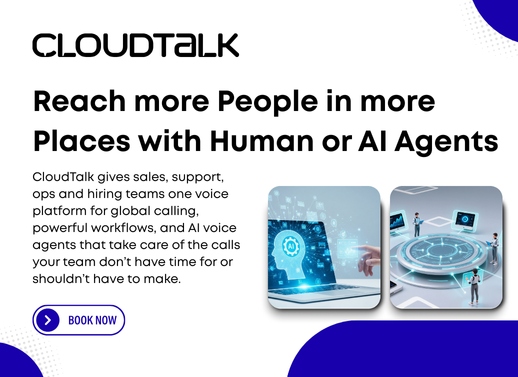
3. CloudTalk
CloudTalk is a high-performance telephone service and call automation service developed for Mid-Market organizations that utilize both customer support services and outbound sales teams in the US. CloudTalk is unique due to its hybrid telephone service products powered by artificial intelligence, visual drag and drop call flow designer, and native multi-line parallel dialing features.
- Pros: Has predictable and unmetered domestic telephone service costs; with the use of native AI and parallel dialing capabilities, will improve the number of outbound sales telephone calls made per day; offers great international telephone service coverage.
- Cons: To use the parallel dialing feature, a premium add-on must be purchased; it provides CTI connectivity to the ticketing systems instead of full native ticketing capabilities; it has a higher risk of having repeating contacts in both the inbound and outbound sales data sets of contacts.
4. Freshdesk
The contact centre platform offered by Freshdesk incorporates a powerful, multi-channel support system that has a strong degree of automation, also known as Freddy AI, Freshworks proprietary Generative AI engine, which allows businesses to benefit from the ease of use of the interface while achieving cost savings vs. traditional and complex contact centre implementations that do not include current functionality for Artificial Intelligence (AI).
- Pros: Easier to use than some of its competitors due to its straightforward user experience (UX) and low technology/learning curve. Freddy AI generates more accurate automated ticket summaries than those provided by other platforms; these summaries contain a lot of useful information for customers and internally at a company; provides many great tools for teams to collaborate internally.
- Cons: The amount of customisation that can be made for enterprise clients may appear to be more restrictive than developer-first or open-source platforms; there are many fewer telephony features compared to pure-play voice systems; there is tight AI Scale/Number of AI licenses available to each organisation.
9. Conclusion
Investing in a modern AI-powered platform for businesses looking at scaling their customer operations, alleviate agent burnout, and access actionable Business Intelligence (BI) is critical for US enterprises. But determining which platform to invest in can be an involved process. Therefore, before investing any money into one, consider conducting a thorough evaluation process that includes how you will utilise the platform, which will determine if you are able to integrate it into your existing Technology Tech stack. You can also visit softwareadviser.ai, a B2B Software-as-a-Service (SaaS) marketplace designed to assist you with identifying, evaluating, and purchasing the best software solutions for your business. You can make informed decisions regarding the right AI Solution for the future of your brand and customer experience by using the specific filters available, as well as reading through professionally verified reviews.
